Email Marketing 101 for TPT Sellers: From List Building to First Campaign
Most TPT sellers can trace their growth back to one thing: better resources. You refine your lessons, strengthen your previews, adjust your descriptions, and gradually your store improves. Sales increase because your products improve, and that progress feels logical and earned.
Traffic starts coming in from TPT search, Pinterest, or social media. You learn how to optimize listings and create content that gets seen. For a while, that momentum feels steady and predictable.
But much of that visibility depends on platforms you do not control. Search rankings shift. Social reach fluctuates. What worked last month may not perform the same way this month.
That is often when sellers begin asking a different question. Not just “How do I get more traffic?” but “How do I stay connected to the teachers who already value my work?”
That is where email marketing for teacherpreneurs makes sense.
The good news is that getting started is far simpler than it sounds. You don’t need advanced funnels or complicated systems. You simply need a clear starting point and a plan you can build on over time.
Here is how to think about email marketing in a way that feels manageable and aligned with the way you already run your business.
What Is Email Marketing? A Simple Overview for TPT Sellers
At its simplest, email marketing is inviting teachers to join your list and continuing the conversation beyond a single download or purchase. When someone signs up for your free resource, they are choosing to hear from you again.
For a TPT seller, that usually begins with a welcome email that delivers the promised freebie and briefly introduces your store. It sets expectations for what subscribers will receive, whether that is seasonal teaching ideas, thoughtful reminders, or updates when you release a new resource.
From there, email becomes a space to provide context that may not fit in a product description. You might explain how you introduce a strategy, share a quick differentiation adjustment, or clarify how a resource supports a specific standard. This added explanation helps teachers understand how your materials function in real classrooms, not just what is included in the file.
Email marketing for teacherpreneurs works best when it reflects your identity as an educator. It gives you room to teach, to clarify, and to guide. When your messages stay aligned with your niche and experience, they feel like a natural extension of your work rather than a separate marketing effort.
How to Build an Email List as a Teacherpreneur
Begin with a free resource that solves a specific problem for your ideal buyer. The more targeted it is, the more effective it becomes. Instead of offering a broad sampler, narrow it to a skill or classroom need, such as analyzing errors in multi-digit multiplication or a first-week reading comprehension check. Specific resources attract teachers who are actively looking for that support, and those teachers are more likely to benefit from your paid products later.
As you create your freebie, consider alignment carefully. The teachers who download it should be the same teachers your store is designed to serve. When your free offer and paid resources support the same audience, your list grows with the right subscribers, not just more subscribers.

Once your freebie is ready, choose an email service provider to host your list. At the beginning, your system only needs three components: a sign-up form, an automated email that delivers the freebie, and a simple confirmation that the subscriber has joined your list. Focusing on these essentials keeps you moving forward without getting distracted by advanced features.
Next, create a landing page where teachers can opt in. This page should clearly communicate who the resource is for, what problem it solves, and how it supports instruction. Naming the grade level, skill focus, and classroom outcome creates clarity and improves conversion. Strong messaging will do more for you than elaborate design.
Once everything is connected, begin intentionally sharing your freebie. Effective list-building tips for TPT sellers usually center around visibility on platforms they already use. If you publish blog content, embed your opt-in where it makes sense for the topic. If you use Pinterest, create pins that address the problem your freebie solves. If you are active on social media, make your link easy to find and reference it when relevant. Consistency in a few strategic places is more sustainable than trying to show up everywhere at once.
As your list grows, notice which platforms bring in subscribers who open emails and click through to your store. Those patterns will help you refine where you focus your energy.
What to Send After Someone Joins Your Email List
Once someone joins your list, your role shifts from attracting attention to building understanding. A new subscriber should quickly see who you serve and how your resources support their classroom.
Your first email should clearly deliver the promised freebie and introduce your niche. If you specialize in upper elementary math intervention or middle school writing workshops, state that directly. Clear positioning helps the right teachers recognize that they are in the right place.
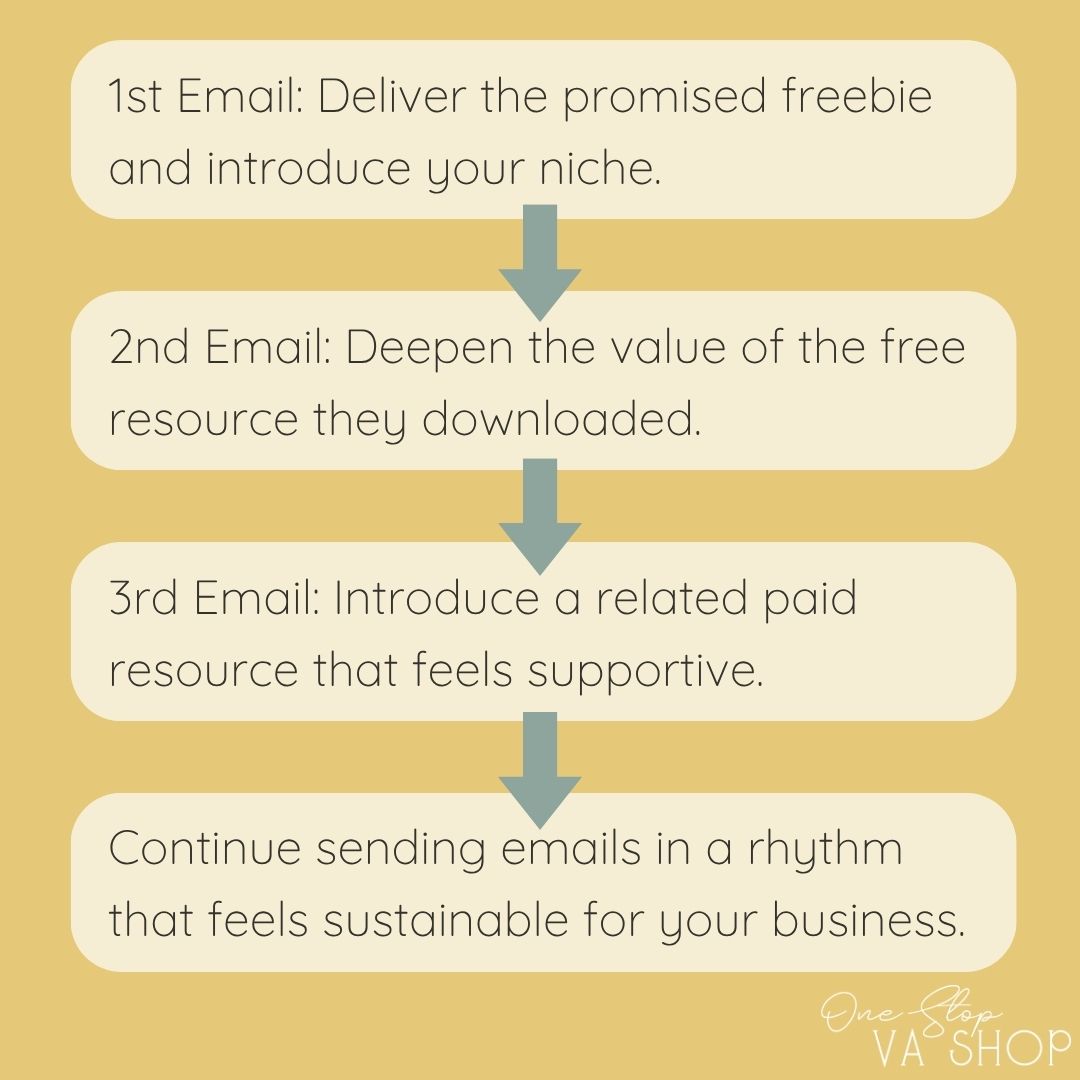
A second email can deepen the value of the free resource they downloaded. Instead of changing topics, expand on the same skill or strategy. You might explain how you implement it during a specific block of your day, address a common student misconception, or suggest a simple extension activity. This approach reinforces your expertise while making the original resource more useful.
A third email is an appropriate place to introduce a related paid resource. The connection should feel obvious. If your freebie addressed word problems involving fractions, your paid product might be a differentiated fraction unit or a small-group intervention set. When the alignment is clear, the recommendation feels supportive rather than promotional.
After your initial sequence, choose a rhythm you can maintain. For many TPT sellers, one email per month is realistic. That message might highlight a seasonal classroom need, share a planning insight, or preview a new resource that fits naturally with previous content. Sustainability matters more than frequency.
Each email should answer a practical question for your reader: how does this help in my classroom? When your content consistently supports real instructional needs, your list becomes an extension of your teaching rather than an added marketing task. Over time, this steady communication builds familiarity, and subscribers learn what to expect from you.
Common Email Marketing Mistakes TPT Sellers Should Avoid
One mistake is delaying email marketing until your list feels large. Many sellers assume they need a certain number of subscribers before sending consistent emails. In practice, a smaller list allows you to refine your messaging and build confidence without pressure. Growth in skill and growth in subscribers often happen together.
Another pattern is limiting communication to promotional periods. When subscribers only hear from you during sales, the connection remains transactional. Regular instructional emails create context for your promotions and make them more relevant when they do arrive.
Some teacherpreneurs also introduce unnecessary complexity early on. Advanced tagging systems and multi-step funnels can be useful later, but they are not required to see meaningful results. A focused freebie, a thoughtful welcome sequence, and consistent communication create a strong foundation. An additional strategy can be layered in once the basics are working smoothly.
Finally, hesitation around the technical setup keeps many sellers from starting at all. While there is a learning curve, most email platforms are manageable when approached one piece at a time. Setting up a form, a landing page, and a welcome email is an achievable first step. Progress tends to come from steady implementation rather than perfect execution.
A Sustainable Way to Grow Your TPT Business
When your freebie aligns with your paid resources, your emails support real classroom needs, and your sending schedule reflects what you can realistically maintain, your list becomes a stable part of your growth strategy. It supports launches, strengthens buyer relationships, and creates continuity between purchases.
If you are ready to build your list but would prefer support setting up your email platform, welcome sequence, or freebie funnel, the team at One Stop VA Shop provides specialized tech and marketing support designed specifically for TPT sellers. We help teacherpreneurs create simple, sustainable email systems so you can focus on creating resources.
→Click here to check out our services and schedule a consult today.