Hiring A TpT Virtual Assistant: How To Onboard A VA Smoothly
If you’ve reached the point in your TpT business where your to-do list feels longer than your creative energy, you’re not alone. Growing your teacher business brings new opportunities, but it also adds layers of responsibility that can be difficult to manage on your own.
Hiring support is often the next logical step. But once you decide to bring in help, another question naturally follows: How do you onboard a virtual assistant in a way that actually works long-term?
TpT VA onboarding is not just a task to check off. It sets the tone for how your business will function as you grow. When the foundation is thoughtful, delegation becomes far more sustainable.
Who is Responsible for Onboarding?
The answer depends on the virtual assistant you hire.
Some virtual assistants, including One Stop VA Shop, already have an onboarding process in place. In that case, your VA will guide you through sharing the information they need about you, your business, and the work they will be supporting.
Other times, you may need to take the lead. If your virtual assistant does not have a formal onboarding process, take the time to provide the information they need rather than jumping straight into assigning tasks.
It may feel like extra work at the beginning, but this is one step worth slowing down for. The time you spend helping your VA understand your business now can prevent confusion, unnecessary revisions, and frustration later.
Why TpT VA Onboarding Matters More Than You Think
Onboarding is not simply about giving access to files or assigning responsibilities. It is about helping someone understand how your business operates.
As teacherpreneurs, we make decisions based on standards we’ve developed over time. We know how we want our brand represented, how we prioritize projects, and what quality looks like in our products. Much of that knowledge lives in our heads.
A virtual assistant cannot support what they cannot see. When you take time to explain your processes and preferences, you move important information out of memory and into something usable. That shift reduces confusion and allows your assistant to contribute more effectively.
For example, you may have an internal rule about how you title resources for SEO, how you structure preview files, or how you respond to customer questions. Unless you explain those patterns, your assistant can only guess. Onboarding is the moment when those invisible standards become clear.
A strong onboarding experience builds alignment from the beginning. Instead of correcting avoidable misunderstandings later, you establish shared understanding early.
Setting Realistic Expectations From The Beginning
One of the most important parts of learning how to onboard a virtual assistant is recognizing that adjustment takes time.
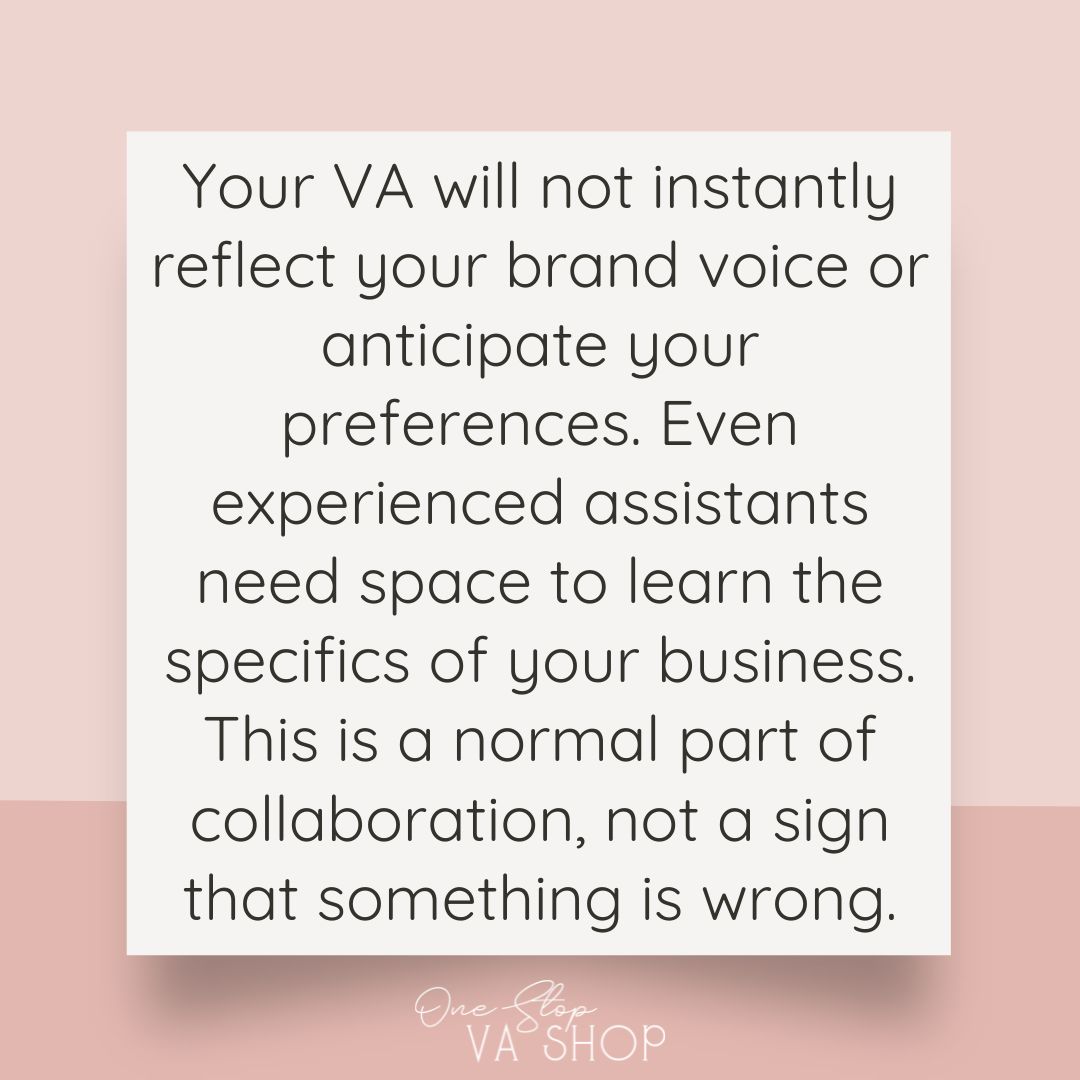
Your VA will not instantly reflect your brand voice or anticipate your preferences. Even experienced assistants need space to learn the specifics of your business. This is a normal part of collaboration, not a sign that something is wrong.
In practical terms, this might mean the first few product descriptions require edits. A graphic may need small formatting adjustments. A system may need refinement once you see it in action. These are signs of learning, not failure.
It is also important to set expectations for yourself. In the early stages, you may need to review work more closely or answer additional questions. That involvement is temporary, but it is necessary. Thoughtful oversight at the beginning prevents ongoing inefficiencies later.
Rather than aiming for immediate independence, aim for steady improvement. Progress in delegation usually happens through refinement, not speed.
How To Onboard A Virtual Assistant Step By Step
If you’re wondering what TpT VA onboarding looks like in practice, think in terms of clarity and consistency rather than complexity.
Step 1: Share the Big Picture
Begin by sharing context. Explain the purpose of your business, who you serve, and what goals you are working toward this year. You might share whether you are focusing on growing bundles, improving conversion rates, expanding your email list, or preparing for a seasonal launch. When your assistant understands the direction of your business, daily tasks feel connected instead of isolated.
Step 2: Define What “Done” Looks Like
Next, define what completion looks like. Describe how you know when a task meets your standards. This might include formatting preferences, communication expectations, or how you prioritize deadlines. Clear definitions eliminate guesswork and reduce the need for revisions.
Step 3: Establish Your Communication System
Establish where work will be tracked and how updates will be shared. Whether you use a project management tool, a shared document, or a task board, choose one central location so communication stays streamlined. Decide how questions should be handled so neither of you is left waiting unnecessarily. A predictable structure creates stability, even when projects change.
Step 4: Start With Clearly Defined Responsibilities
As you begin assigning responsibilities, focus on well-defined tasks with a clear outcome. For example, instead of saying “help with email,” you might clarify that a draft should include a subject line, preview text, and three product links formatted a specific way. Specific direction allows both of you to observe how the workflow functions and make adjustments as needed.
As familiarity increases, responsibilities can expand naturally. Successful onboarding is less about the type of tasks you delegate and more about the clarity surrounding them.
Creating Clear Systems That Support Delegation

Many TpT sellers worry they need perfectly documented systems before hiring. In reality, systems can be refined over time.
What matters is that your processes are visible. Files should be organized in a way that makes sense. Templates should be clearly labeled. Recurring responsibilities should have a consistent home. When information is easy to locate, your assistant can move forward without constant clarification.
If you have recurring monthly tasks, it can help to outline them in one place. If you follow a launch sequence each quarter, writing down the general order of steps gives your assistant a reference point. Even a simple outline is more helpful than relying on memory.
Well-organized systems also make it easier for you to step back. Instead of responding to repeated logistical questions, you can rely on the structure you have created together.
As your business grows, these systems become part of its stability. They allow expansion without increasing daily stress.
Communication Habits That Keep Things Running Smoothly
Strong collaboration depends on predictable communication. That does not require daily meetings or constant updates. It requires consistency.
Regular check-ins, even brief ones, allow both of you to confirm priorities and address small issues before they become larger ones. This could be a weekly written update, a shared progress note, or a scheduled message outlining what was completed and what is next.
It can also be helpful to clarify turnaround expectations. If you typically respond within one business day, communicate that. If urgent requests are rare, define what qualifies as urgent. Clear boundaries prevent unnecessary pressure.
When feedback is needed, offer it with specificity. If something needs adjustment, explain what you would change and why. Detailed feedback shortens the learning curve and strengthens trust.
Over time, you may notice that fewer corrections are necessary. That is usually a reflection of clear communication in the early stages.
What Smooth Onboarding Means For Your Business Growth
Thoughtful onboarding does more than make delegation easier. It often changes how you see your own business.

Many TpT sellers build their shops through experience. You figure things out as you go. You create systems because you need them, not because you planned them in advance. When you onboard a virtual assistant, you are asked to explain those systems out loud. That process alone brings clarity.
As you describe how you prioritize tasks or what standards matter most to you, you begin to see patterns more clearly. You may notice areas that feel efficient and others that need adjusting. Onboarding creates a natural pause that helps you organize your thinking.
It also makes your business less dependent on you holding everything in your head. When processes are shared and expectations are clearly defined, daily operations do not rely entirely on your memory or availability. That shift makes growth feel steadier.
Over time, this steadiness creates capacity. You are not just completing tasks. You are guiding the direction of your shop while trusted support handles defined responsibilities. That allows you to focus on planning new products, refining existing ones, or simply stepping away without everything stalling.
Smooth onboarding is not just about bringing someone into your business. It is about building a version of your business that can support both your goals and your life outside of work.
The Bottom Line
Hiring a virtual assistant is a meaningful step in your TpT journey. How you onboard your VA determines how confidently you can delegate and how effectively your business can expand.
When expectations are defined, systems are visible, and communication is consistent, collaboration becomes far more efficient. That foundation allows your business to grow without increasing your workload.
If you’re ready to stop carrying every operational detail alone and want support from a team that understands the rhythm of a TPT business, One Stop VA Shop provides specialized virtual assistant services designed specifically for teacherpreneurs. Our VAs are trained in the platforms and workflows common to this space, so you can focus on leading your business with clarity and steady confidence.
→ Click here to schedule a consultation today.